

Materials
Five surfaces. One that is right for your room.
Every material here will make a kitchen look better. They differ in how they behave under heat, under a knife, under a decade of daily use. Here is the honest comparison.
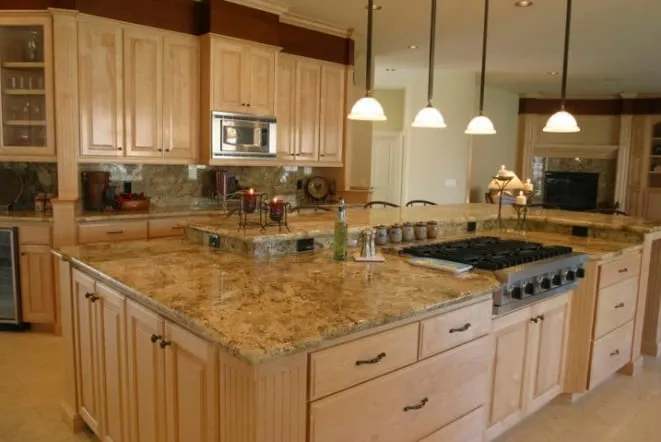
Granite
Born of fire, built for daily life.
Granite is an igneous stone: molten rock cooled slowly deep underground, which is why every slab carries its own crystal pattern of quartz, feldspar and mica. No two are alike, and the slab you choose in our showroom is the slab that goes in your kitchen.
- Maintenance
- Reseal every 1–5 years
- Best for
- Kitchens, islands, outdoor grills, baths
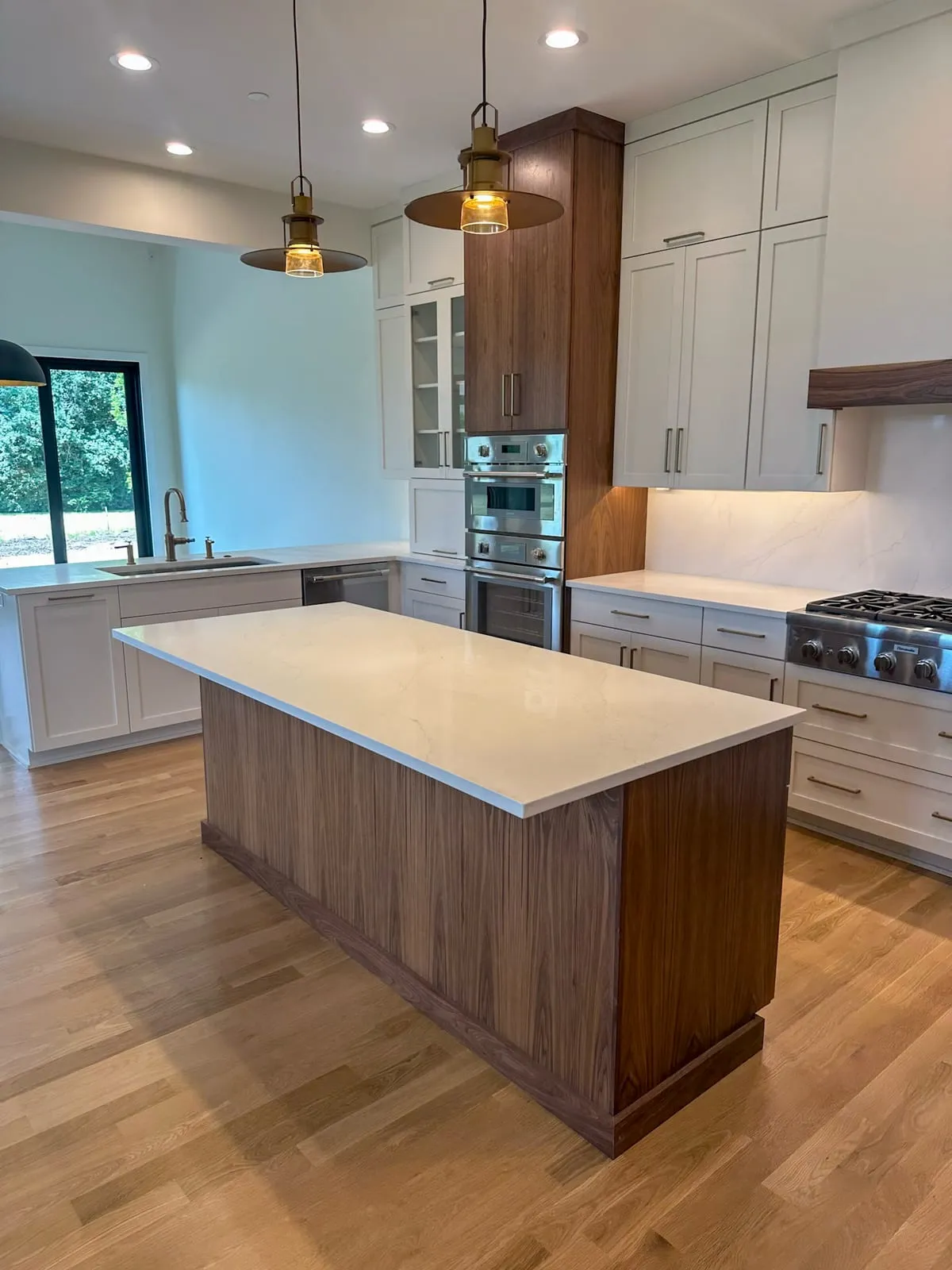
Quartz
Engineered for real life. Sealed for good.
Quartz is engineered stone: natural quartz crystals bound with resin and pigment. The result behaves like stone but arrives with none of the porosity. The pattern you see on the sample is the pattern you get across the whole run, which makes matching multiple pieces predictable.
- Maintenance
- Never needed, quartz is non-porous
- Best for
- Kitchens, baths, laundry, commercial
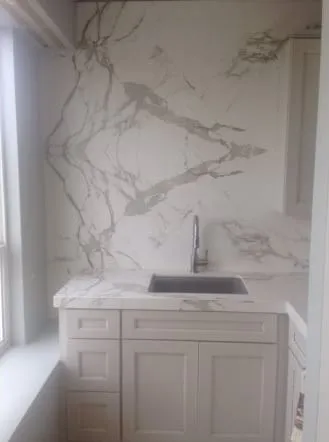
Marble
The stone every other stone is compared to.
Marble is limestone recrystallized under heat and pressure, which is where the veining comes from. It is the classical choice: cool to the touch, luminous under light, and the reason pastry chefs and sculptors have used it for centuries.
- Maintenance
- Seal periodically; wipe spills promptly
- Best for
- Baths, vanities, fireplace surrounds, baking stations
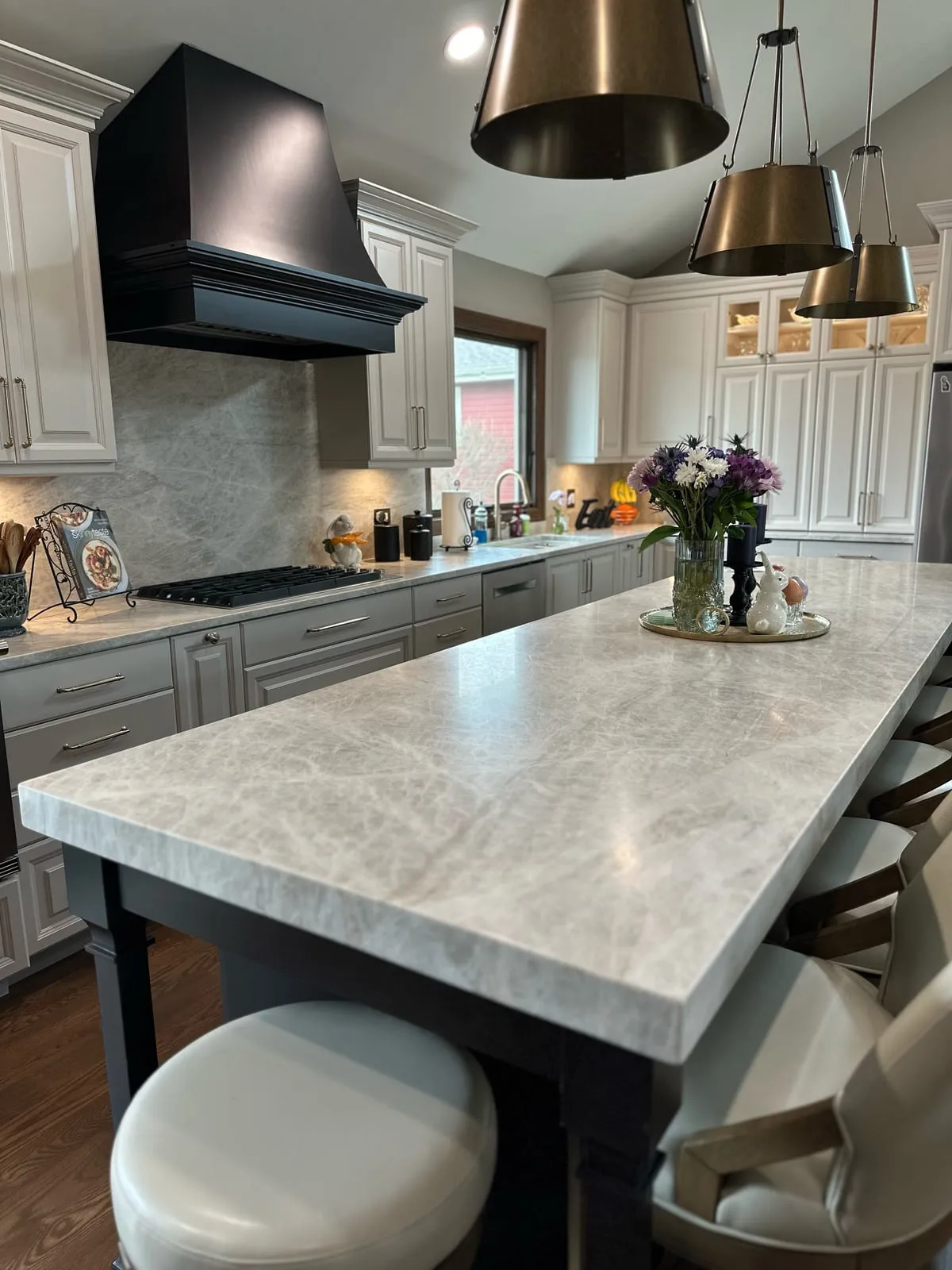
Quartzite
Marble looks. Granite backbone.
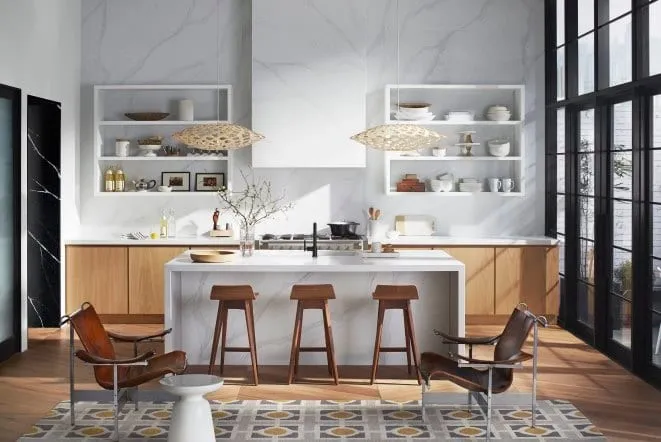
Quartzite starts as sandstone and is compressed into one of the hardest surfaces you can put in a kitchen. Visually it reads like marble, with soft grey and white veining over a bright field, but it stands up to the daily abuse a busy island takes.
- Maintenance
- Reseal like granite
- Best for
- Kitchen islands, hardworking kitchens, baths
Porcelain
Sintered, ultra-thin, and unbothered by sunlight.
Porcelain surfaces are sintered: mineral powders fired at extreme temperature into a dense, ultra-thin panel. Large-format sheets mean fewer seams, and the material is happy in places other stone struggles.
- Maintenance
- None required
- Best for
- Outdoor kitchens, fireplaces, full-height backsplashes
Side by side
How the five compare
Price bands are relative guidance, not quotes. The estimate is where real numbers live.
| Granite | Quartz | Marble | Quartzite | Porcelain | |
|---|---|---|---|---|---|
| Durability | Very hard, resists scratches | Very hard, engineered surface | Softer, will patina with use | Extremely hard, harder than granite | Very hard, scratch-resistant |
| Heat | Excellent, hot pans are not a problem | Good, but always use a trivet | Very good, a classic baking surface | Excellent | Heat-proof |
| Maintenance | Reseal every 1–5 years | Never needed, quartz is non-porous | Seal periodically; wipe spills promptly | Reseal like granite | None required |
| Price band | $$ | $$–$$$ | $$–$$$ | $$$ | $$–$$$ |
| Best for | Kitchens, islands, outdoor grills, baths | Kitchens, baths, laundry, commercial | Baths, vanities, fireplace surrounds, baking stations | Kitchen islands, hardworking kitchens, baths | Outdoor kitchens, fireplaces, full-height backsplashes |
Not all colors are in stock. Please call to confirm availability.Call (630) 966-9666
Not sure which one you want?
That is what the showroom is for. Bring a cabinet door and a paint chip, and we will narrow it down in twenty minutes.